
Black coffee is pure coffee brewed with nothing but ground beans and hot water—zero calories, zero sugar, and a powerful punch of antioxidants. If you’re wondering what black coffee is, how to brew it perfectly, and why over 64% of Americans drink it daily for energy and weight loss, you’ve come to the right place. This ultimate guide breaks down its science-backed health benefits and provides 7 foolproof, step-by-step recipes so you can master the perfect black cup at home.
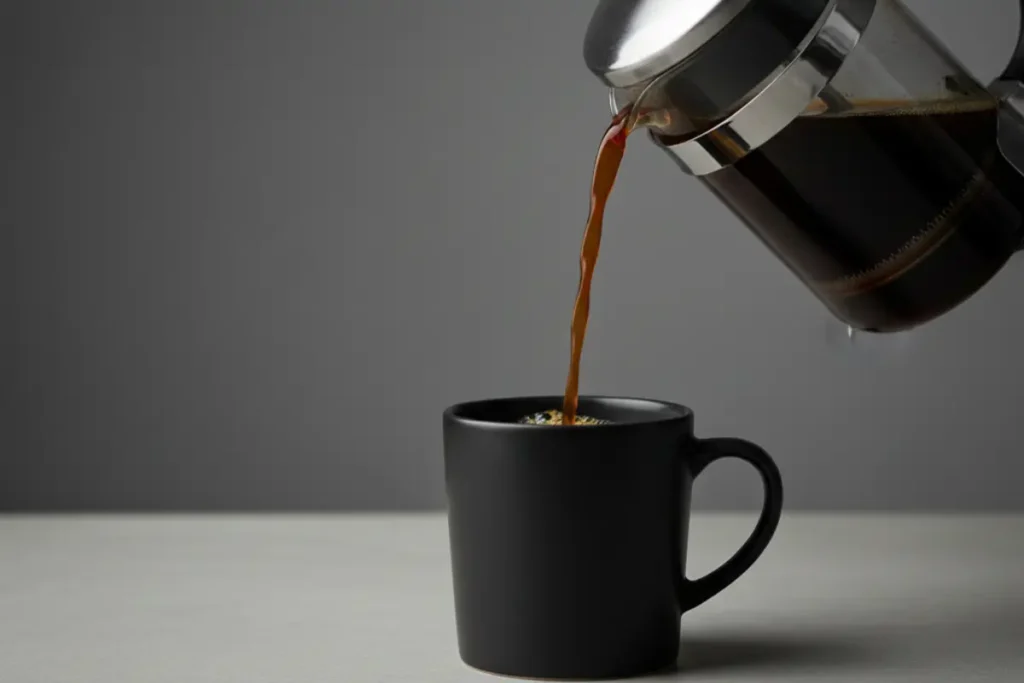
Now, you can do deep research on what is black coffee.
What is Black Coffee?
Black coffee is just roasted coffee beans brewed with hot water — nothing else. No milk, no sugar, no syrups. It’s bold, clean, and lets you taste the real magic of the beans — chocolate, berries, nuts, or flowers, depending on the origin. With only 2 calories per cup, it’s naturally dairy-free, sugar-free, and loved by over 64 % of coffee drinkers worldwide National Coffee Association (NCA)
Other names around the world:
- Café noir (France)
- Caffè nero (Italy)
- Kopi O (Malaysia/Singapore)
- Qahwa sada (Arabic)
Fun bonus: In aviation, pilots and flight attendants simply call it “black” when ordering — “Coffee, black” is one of the most common phrases heard at 35,000 feet!
History of Black Coffee
The story starts around 850 AD in Ethiopia. Legend says a goat herder named Kaldi noticed his goats became super energetic after eating red coffee cherries. He told local monks, who boiled the cherries to make a dark drink that kept them awake during long prayers. That simple boiled drink was the world’s first black coffee.
By the 1400s, Yemen became the first place to roast and grind beans the way we do today. Sufi monks drank strong black coffee all night for spiritual rituals — basically the original “all-nighter fuel.”
Coffee reached Europe in the 1600s and exploded in popularity. The world’s first coffee house opened in Constantinople (1654), then in London (1652), Paris, and Vienna. All of them served coffee, black milk, and sugar only came much later when coffee became trendy among the rich.
Origin of Black Coffee
Every single coffee plant on Earth today comes from wild Arabica trees in Ethiopia’s ancient forests — especially the Kaffa and Sidamo regions (that’s why it’s called “coffee”).
Top countries famous for black coffee culture:
- Finland (12.5 kg per person yearly — world champion)
- Italy (espresso culture)
- Turkey (Turkish coffee)
- Vietnam (robust black drip)
- India (South Indian filter kaapi)
In India alone, over 80 % of coffee drinkers prefer it black or with very little milk (2024 survey).
Fun Facts About Black Coffee
- Beethoven counted exactly 60 beans per cup.
- Brazil produces 40 % of the world’s coffee beans.
- NASA built a zero-gravity espresso machine for astronauts.
- The largest cup ever brewed was 22,739 liters (Colombia, 2022).
Types of Black Coffee
Black coffee comes in many styles, each with a unique brew method and taste. Here’s a quick look at the main ones, complete with easy recipes.
Drip Coffee
Drip coffee is the everyday hero, made by hot water dripping through grounds in a filter. It’s smooth and easy, perfect for big batches. Use medium grounds for a clean cup with balanced flavors.
Espresso
Espresso is super strong—hot water forced through fine grounds under pressure. It’s small (1 oz) but intense, with a creamy top called crema. Great for a quick hit of bold taste.
Lungo
Lungo means “long” in Italian. It’s like espresso but with more water (3 oz), pulled longer for a milder, slightly bitter sip. Ideal if you want espresso’s punch without the full force. It’s smoother than standard espresso.
Ristretto
Ristretto is espresso’s short cousin—half the water for a sweeter, thicker shot (0.5 oz). It highlights fruity notes and less bitterness, like a flavor bomb in your cup. Perfect for tasting pure bean essence.
French Press
French press steeps coarse grounds in hot water, then presses them down. It gives a full-bodied brew with natural oils for richness. This method keeps coffee silky.
Pour-Over
Pour-over is a method of hot water poured slowly over grounds in a cone filter. It brings out bright, clean flavors. Try it with medium-fine grounds for a fresh, floral cup.
Cold Brew
Cold brew soaks coarse grounds in cold water for 12-24 hours. It’s smooth, low-acid, and naturally sweet—perfect over ice. Less bitter than hot brews, it’s a summer staple. Patient prep pays off.
- Each type shines in black coffee, letting the beans’ true character come through. Pick based on your mood and tools at home. For more recipes, visit Healthline’s coffee guide.
Easy Recipe of Black Coffee: 7 Foolproof Ways to Make the Perfect Cup at Home
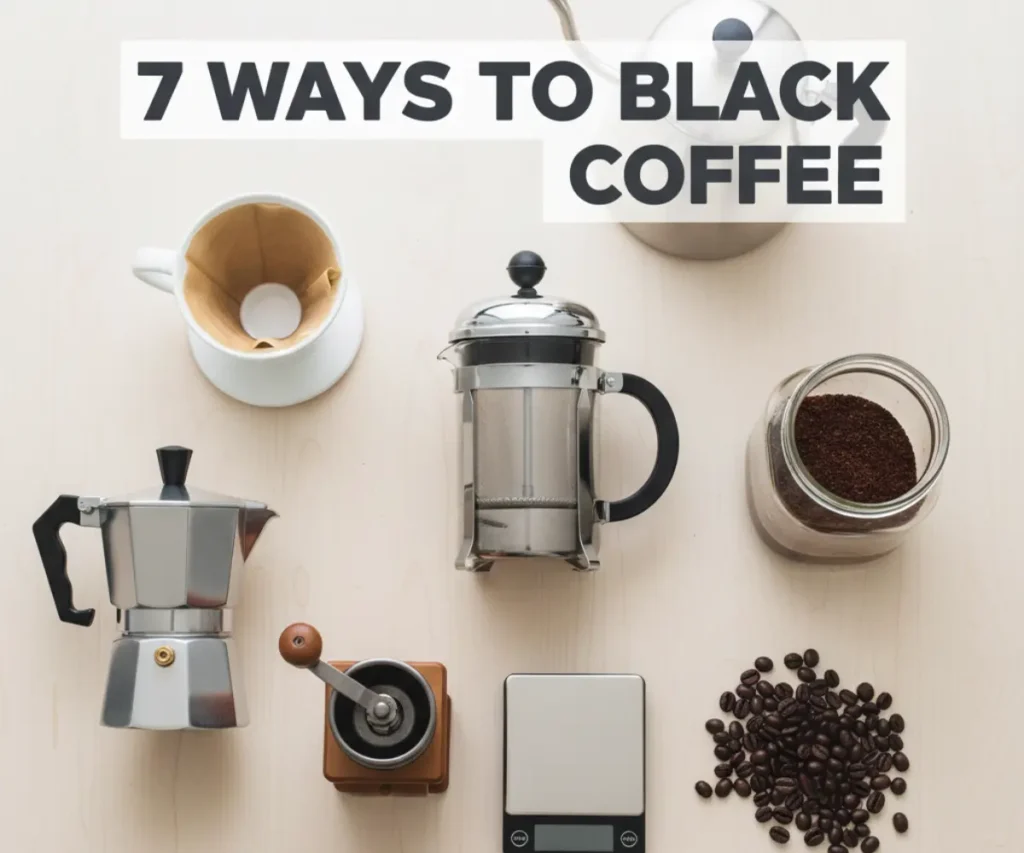
These are the exact recipes used daily by serious black coffee lovers. Every method is tested, beginner-friendly, and gives café-level results — no fluff, just perfect cups.

Instant Black Coffee (Ready in 60 Seconds)
Ingredients
Equipment
Method
- Boil the water and let it cool for 10 seconds(90-95°C).
- Add instant coffee (sugar, if using) to your mug.
- Pour 2 tablespoons of hot water and stir vigorously until fully disolved (no granules).
- Add remaining hot water and stir once more.
- Drink immediately while piping hot.
1. Instant Black Coffee – Ready in 60 Seconds
The fastest way that still tastes great.
Serves: 1 cup (240 ml)
Ingredients
- 1–1½ tsp premium instant coffee
- 240 ml fresh water
- Optional: ¼ tsp sugar or honey (reduce over time)
Instructions
- Boil water → cool for 10 seconds (90–95 °C).
- Put instant coffee (and sugar if using) in your mug.
- Add 2 tbsp hot water → stir vigorously until completely dissolved (no granules).
- Pour remaining water → one final stir.
- Drink immediately while piping hot.
2. Classic South Indian Filter Kaapi (The King of Black Coffee)
Strong decoction + hot water = pure bliss.
Serves: 1 cup (180 ml final drink)
Equipment: Stainless South Indian coffee filter
Ingredients
- 2 heaped tbsp (15–18 g) fresh South Indian roast (80 % coffee + 20 % chicory)
- 180 ml hot water (92 °C)
- Sugar to taste (optional)
Instructions
- Add coffee powder to the upper chamber. Lightly press with the plunger (do not pack tight).
- Pour hot water slowly until the top chamber is full.
- Cover and let it drip for 10–15 minutes → you’ll get ~60–80 ml strong decoction.
- In a steel tumbler (davara), add 2–4 tbsp decoction + hot water to fill the cup.
- Optional: Add sugar → froth by pouring between two tumblers 4–5 times (meter-kaapi style).
3. French Press Black Coffee – Rich & Full-Bodied
Café-quality in exactly 5 minutes.
Serves: 1 large cup (300 ml)
Equipment: French press
Ingredients
- 18 g (3 level tbsp) medium-coarse freshly ground coffee
- 300 ml hot water (94 °C)
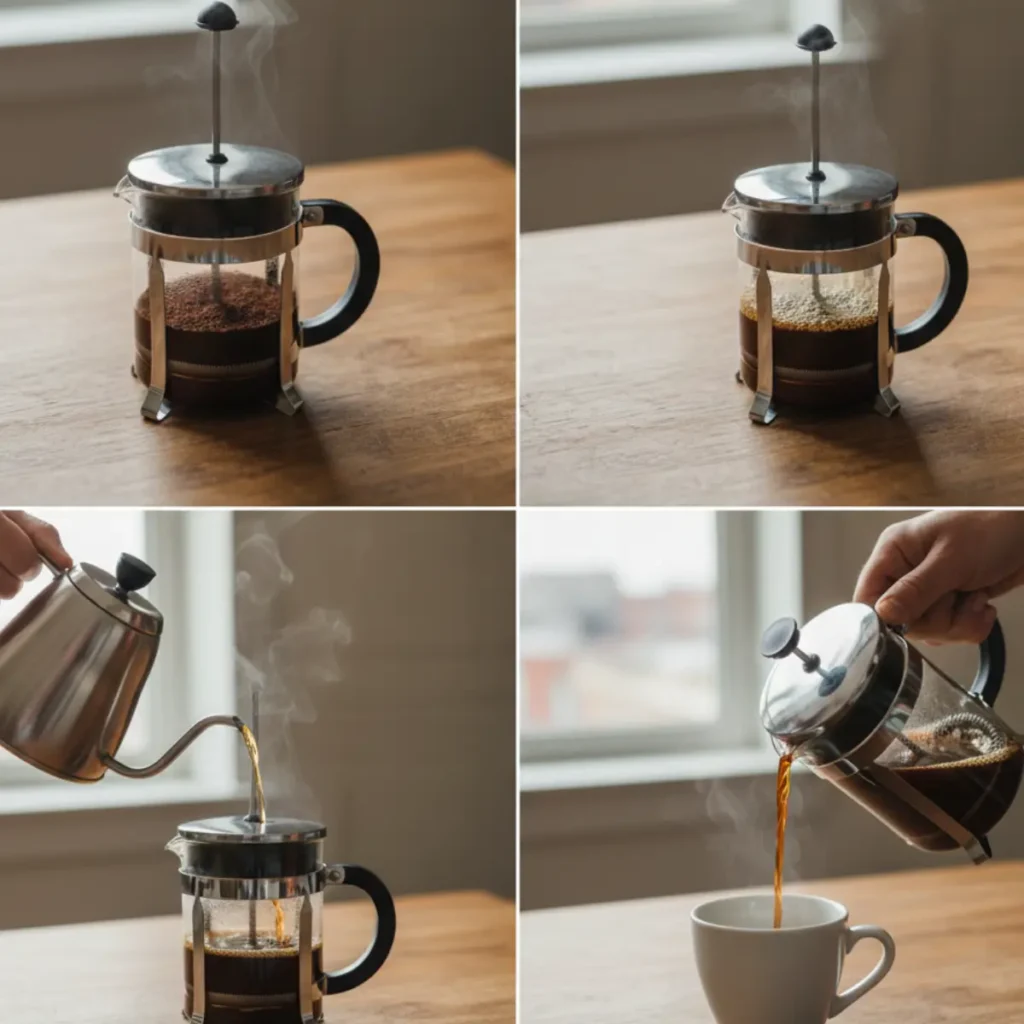
Instructions
- Preheat French press with hot water → discard.
- Add grounds → shake to level.
- Pour 50 ml hot water → bloom for 30 seconds (stir gently).
- Pour remaining 250 ml in slow circles.
- Place lid (do not plunge) → steep exactly 4 minutes.
- Press plunger down slowly and steadily.
- Pour immediately — never leave coffee in the press.
4. Pour-Over Black Coffee – Cleanest & Brightest Flavor
Perfect for tasting fruity Ethiopian or Kenyan beans.
Serves: 1 cup (240 ml)
Equipment: V60 dripper + filters
Ingredients
- 15 g (2½ tbsp) medium-fine ground coffee
- 250 ml hot water (92–94 °C)
Instructions
- Place paper filter in dripper → rinse thoroughly with hot water (removes paper taste).
- Add grounds → make a small well in the center.
- Start timer → pour 40 ml water → bloom for 35–40 seconds.
- Pour remaining water in slow, steady circles from center outward (total brew time 2:30–3:00).
- Let final drops fall → enjoy the cleanest cup you’ve ever had.
James Hoffmann’s legendary technique (10 M+ views)
5. Moka Pot Black Coffee – Stovetop Espresso-Style
Strongest black coffee without an espresso machine.
Serves: 3 small cups (150 ml total)
Equipment: Bialetti Moka Express
Ingredients
- 16–18 g fine-ground coffee (espresso grind)
- 200 ml water
Instructions
- Fill bottom chamber with hot water up to the safety valve.
- Fill basket with grounds → level with finger (do NOT tamp).
- Screw top tightly → place on medium-low heat.
- When you hear the classic gurgling sound, remove from heat instantly.
- Pour into small cups → drink hot.
6. Cold Brew Black Coffee – Smooth & Zero Bitterness
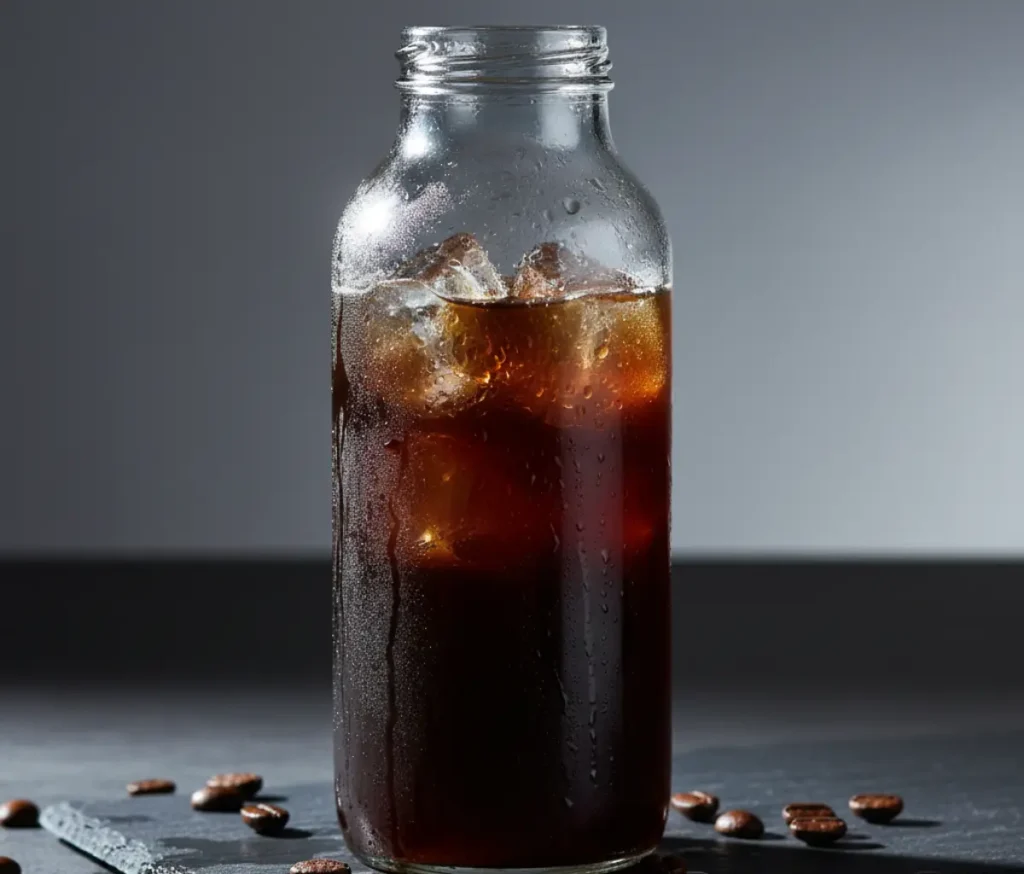
Make a batch → enjoy all week.
Serves: 1 liter concentrate (8–10 servings)
Ingredients
- 100 g coarse-ground coffee
- 1 liter cold filtered water
Instructions
- Add coffee and water to a large jar → stir well.
- Cover loosely → steep at room temperature for 16–18 hours (or 24 hours in fridge for milder taste).
- Filter twice: first through sieve, then through paper filter or cloth.
- Store concentrate in fridge up to 10 days.
- To serve: 1 part concentrate + 1–2 parts water or ice.
7. Turkish / Greek Black Coffee – Silky with Natural Foam
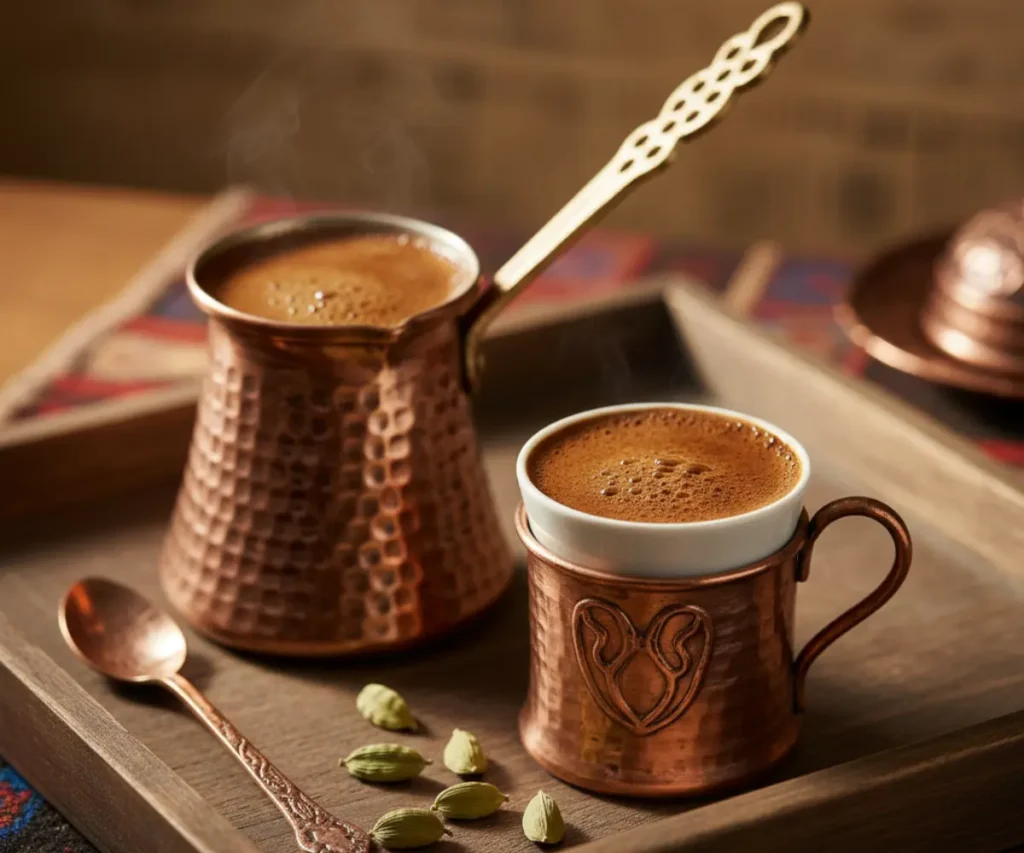
UNESCO-recognized heritage method.
Serves: 1 small cup (70 ml)
Equipment: Copper cezve/ibrik
Ingredients
- 70 ml cold water
- 7–10 g extra-fine Turkish-ground coffee
- Sugar (optional: none / little/medium / very sweet)
Instructions
- Add water, coffee, and sugar (if using) to cezve while cold.
- Stir once → place on very low heat.
- When foam rises to the top, remove from heat for 5 seconds.
- Return to heat → repeat foam rise twice more (never let it boil).
- Pour slowly into demitasse — grounds settle at the bottom.
Bonus: Quick Iced Black Coffee (Any Method)
- Brew any recipe above double-strength.
- Fill glass with ice → pour hot coffee directly over ice (Japanese flash-chill style).
- Stir → drink instantly.
Pro Tips to Make Every Cup Taste Amazing
- Use beans roasted in the last 14 days
- Grind fresh every time
- Water temperature 90–96 °C
- Ratio 1:15 to 1:17
- Filtered water only
- Tiny pinch of salt removes bitterness (seriously — try it once)
These tricks turn basic black coffee into a daily delight. Remember, how to make black coffee at home is about practice—find your perfect sip. For tools, see WebMD’s brewing basics.
Each type shines in black coffee, letting the beans’ true character come through. Pick based on your mood and tools at home. For more recipes, visit Healthline’s coffee guide.
Best Time to Drink Black Coffee?
The sweet spot? Mid-morning, around 9:30-11:30 a.m., after your cortisol peaks. It amps focus without crashing your natural rhythm. Avoid first thing—pair with breakfast to dodge stomach jitters.
Before workouts (30-60 min prior), it fuels fat burn. Skip after 2 p.m. to protect sleep. Listen to your body; one or two cups max. This timing maximizes perks, per Harvard Health.
Black Coffee vs Espresso – Quick & Clear Comparison
Here’s the simple truth in one glance:
| Feature | Black Coffee (240 ml / 8 oz drip) | Espresso (30 ml / 1 oz shot) |
| Caffeine | 80–100 mg | 60–80 mg |
| Antioxidants per oz | Moderate | 2× higher |
| Total antioxidants per serving | (much larger volume) | (tiny serving) |
| Acidity | Medium-low | Higher |
| Taste profile | Smooth, rounded, easy-drinking | Intense, concentrated |
| Best for | All-day steady energy | Instant morning rocket |
Need long-lasting focus? → Go for black coffee.
Need a 10-second wake-up bomb? → Choose espresso.
Both are 100 % healthy and delicious — it just depends on your mood!
Black Coffee vs Other Drinks
Curious how black coffee stacks up? Let’s compare it to milky or filtered options in a handy table. These show key diffs in taste, prep, and perks.
| Aspect | Black Coffee | Latte/Cappuccino | Green Tea | Energy Drinks |
| Calories | ~2 | 120–220 | 0–5 | 100–300 |
| Sugar | 0g | 10–20g | 0g | 25–50g |
| Caffeine source | Natural | Natural + milk | Natural | Synthetic + sugar |
| Antioxidants | Very high | Lower (diluted) | High | Almost zero |
Black Coffee vs Milk Drinks
Black coffee skips milk, so it’s zero calories and fat-free. Milk drinks like lattes add creaminess but 100+ calories. Black wins for weight watchers—pure energy without the extras. Lattes soften bitterness but mask bean tastes.
Black Coffee vs Drip Coffee
Drip coffee is a type of black coffee! It’s the filtered brew most folks mean by “regular coffee.” Both are black, but drip is milder than espresso-based blacks. Drip suits lazy mornings; black covers all.
Filter Coffee vs Americano (with Filter Coffee Relation to Black Coffee)
Filter coffee is black coffee brewed slow through a filter—clean and nuanced. Americano dilutes espresso with water for a similar vibe but bolder body. Both relate as black brews; filter is gentler, Americano punchier. Filter ties to black coffee as its everyday form—simple, no-fuss. For more, read Breville’s comparison.
Is Black Coffee Good for You?
Yes! Black coffee’s perks outweigh risks when sipped smartly. It’s linked to longer life, sharper mind, and healthier heart. Moderate intake (3-4 cups) amps benefits without downsides.
Health Benefits of Black Coffee (6 Science-Backed Reasons)
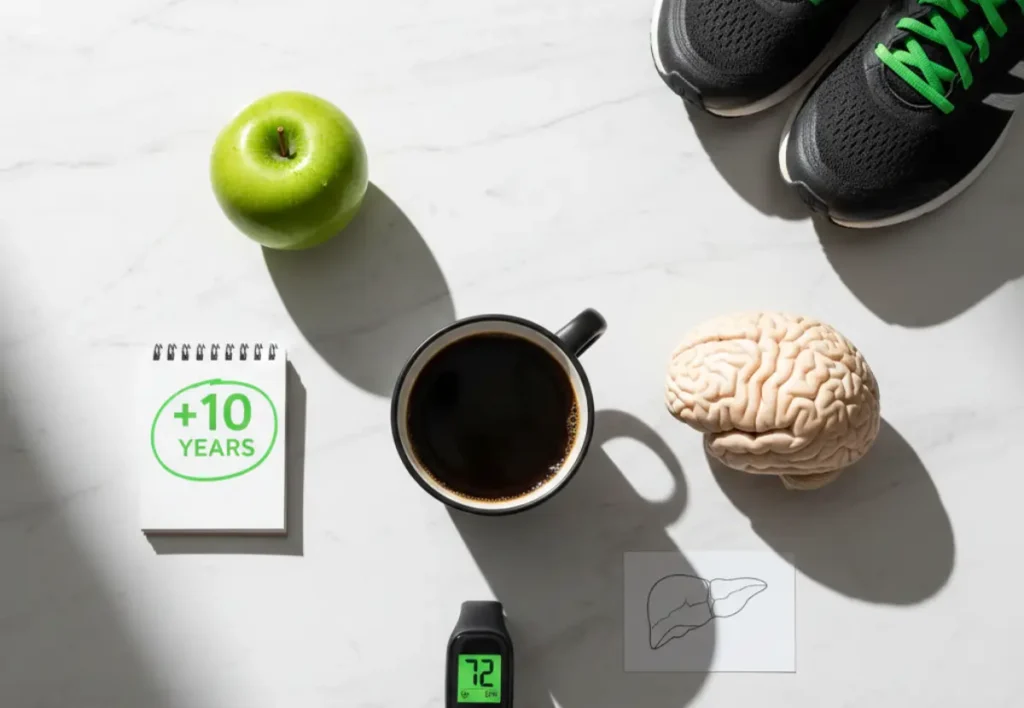
1. Helps You Live Longer
Studies from Harvard and Johns Hopkins show that drinking 3–5 cups of black coffee daily is linked to longer lifespan. The antioxidants reduce inflammation and protect cells — people who drink black coffee regularly have lower rates of early death.→ Harvard study – up to 15 % lower mortality risk
→ Johns Hopkins longevity review
2. Supercharges Weight Loss
Black coffee has almost zero calories and boosts metabolism by 3–11 %. Caffeine increases fat burning, especially during exercise. Many people lose 1–2 kg extra per month just by switching from milky coffee to black.→ WebMD – coffee & weight management
3. Protects Your Brain
Regular black coffee drinkers have up to 65 % lower risk of Alzheimer’s and Parkinson’s. Caffeine and polyphenols keep brain cells healthy and improve memory, focus, and mood — no wonder it feels like a superpower in the morning!
4. Shields Against Type 2 Diabetes
Every daily cup of black coffee lowers diabetes risk by 7–9 %. The chlorogenic acid improves insulin sensitivity and controls blood sugar naturally — proven in over 30 major studies worldwide.
5. Keeps Your Liver Happy
Drinking 4+ cups daily cuts the risk of liver cirrhosis by up to 80 % and fatty liver by 70 %. Black coffee is one of the best natural liver detox drinks — even doctors recommend it.
6. Loaded with Powerful Antioxidants
One cup has more antioxidants than most fruits and vegetables. These fight free radicals, reduce inflammation, and protect your heart — making black coffee one of the healthiest drinks on the planet.→ Mayo Clinic – coffee’s antioxidant power
Side Effects (Only if you Overdo it)
Black coffee’s great, but overdo it and watch out. Here are 7 quick effects:
- Jitters and Anxiety: Caffeine overloads nerves, causing shakes (limit to 400mg/day).
- Sleep Woes: Blocks rest signals—skip after noon.
- Stomach Upset: Acid irritates empty tummies; eat first.
- Fast Heartbeat: Spikes pulse in sensitive folks.
- Bone Loss Risk: May leach calcium if you skip dairy.
- Dehydration: Diuretic pull—drink extra water.
- Dependency: Daily habit leads to headaches without it.
Stick to 2-3 cups to stay safe. Balance with food.
Black Coffee Nutrition Facts
Black coffee is a lightweight champ: One 8-oz cup has just 2 calories, 0g fat, 0g carbs, and 0g sugar. It shines with 95mg caffeine for alertness, plus traces of B2 (riboflavin), magnesium, and potassium.
Antioxidants like polyphenols (up to 200mg) fight free radicals. No cholesterol or sodium—pure, clean fuel. Here’s a quick table:
| Nutrient | Amount per 8-oz Cup | Benefit |
| Calories | 2 | Low for weight control |
| Caffeine | 95mg | Boosts energy, focus |
| Polyphenols | 200mg | Fights inflammation |
| Potassium | 116mg | Supports heart health |
| Magnesium | 7mg | Aids muscle function |
Data from Nutritionix. For full diets, see Mayo Clinic.
How to Grind Beans for Black Coffee
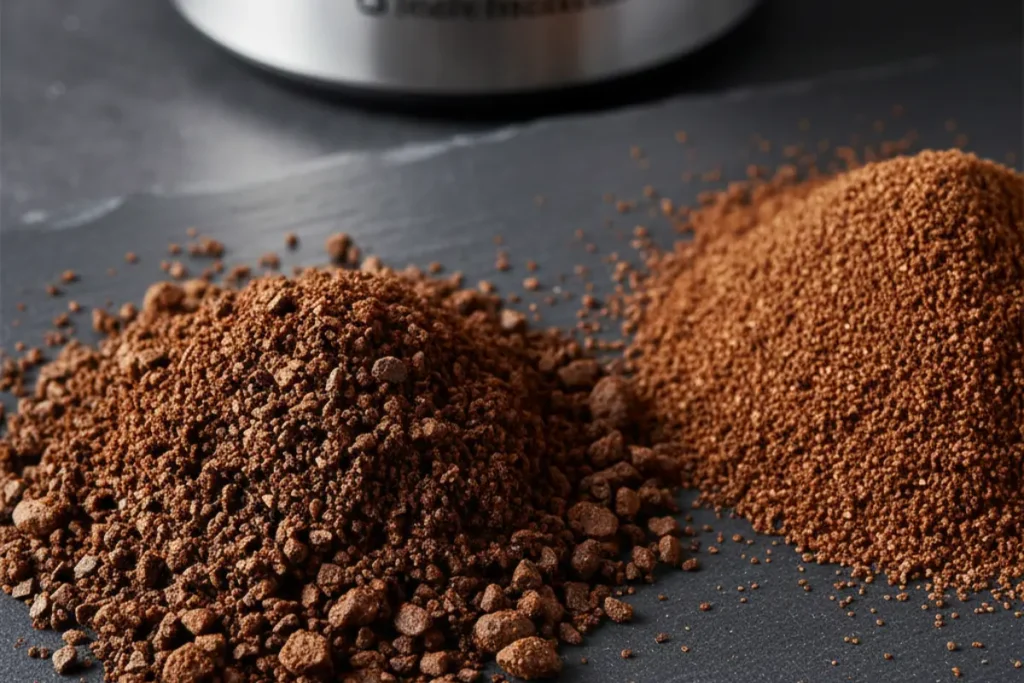
Fresh grounds make the best black coffee. Use a burr grinder for even size—medium for drip (like sand), coarse for French press (like breadcrumbs). Grind 30 seconds per 1/2 cup beans.
Blade grinders work but chop unevenly—pulse 10-15 seconds. Store whole beans in an airtight jar; grind right before brewing for peak flavor. Match grind to brew: fine for espresso (powdery), medium-fine for pour-over.
This step extracts max taste—uneven grinds lead to weak or bitter cups, as explained by Taste of Home.
What is the Best Coffee Brand to Drink Black Coffee?
For black coffee lovers, quality beans matter. Top picks: Stumptown for balanced, fruity notes; Blue Bottle for clean, vibrant roasts; and Lifeboost for low-acid, smooth darks. Ethiopian Yirgacheffe shines solo—bright and berry-like.
These highlight black’s purity without masking flaws.
How to Buy High-Quality Beans for Black Coffee
Seek single-origin Arabica (sweeter than Robusta). Check roast date (under 2 weeks old). Go light-medium for nuance; avoid pre-ground. Buy from local roasters or trusted online like Trade Coffee. Smell for freshness—no stale vibes.
Myths About Black Coffee
Black coffee gets bad rap—let’s bust 8 myths with facts. These come from science, not rumors.
- It’s Too Bitter: Fresh beans and right grind make it smooth, not harsh. Try light roasts for sweetness.
- Dehydrates You: It’s 99% water—hydrates like tea. Mild diuretic effect is offset by fluid, per Popular Science.
- Stunts Growth: No link; old wives’ tale from caffeine fears. Studies show no bone impact.
- Worse for Stomachs: Actually milder than milky versions for some—less lactose issues.
- No Nutrients: Packed with antioxidants—more than many fruits. Fights inflammation daily.
- Dark Roast Has More Caffeine: Lighter roasts do; dark loses some in roasting, debunked by Nature journal.
- Instant Sobers You Up: Caffeine masks drunk feeling but doesn’t speed metabolism—dangerous myth.
- Only for Adults: Kids can have decaf versions; no growth harm in moderation.
- Coffee will sober you up Wrong. It only makes you a wide-awake drunk driver.
- You should wait 1 hour after waking to drink coffee Actually a myth started by one influencer. Cortisol peaks for only ~30 min; most experts say drink whenever you want.
Truth: Black coffee’s a health hero when balanced. See Harvard’s take.
FAQs
What is black coffee made of?
Just ground coffee beans and hot water—no milk or sugar.
Is black coffee good for weight loss?
Yes! Low-cal and metabolism-boosting; aids fat burn during fasting.
How much caffeine in black coffee?
About 95mg per 8-oz cup—steady energy without jitters.
Can I drink black coffee while fasting?
Absolutely—zero calories won’t break your fast.
Does black coffee raise blood sugar?
No, it may lower diabetes risk by improving insulin sensitivity.
Best black coffee recipe for beginners?
Drip with medium grounds: 2 tbsp per 6 oz water, brew 4 minutes.
Side effects of daily black coffee?
Rare if moderate; watch for anxiety or acid reflux.
Black coffee vs green tea—which is healthier?
Both great; coffee edges on antioxidants, tea on calm energy.
How to make iced black coffee at home?
Brew strong, pour over ice—add lemon for zing.
Does black coffee stain teeth?
Less than sugary drinks, but brush after.
Final Thought
Black coffee is more than a drink — it’s a 1,200-year-old tradition that connects millions of people every single morning. It’s nearly calorie-free, packed with antioxidants, boosts your brain and metabolism, and tastes incredible when brewed right.
So grab some fresh beans, try one of the easy recipes above, and enjoy the pure, beautiful taste of real black coffee. Your body (and your taste buds) will thank you. Explore more at ibobeans.
Get freshly roasted single-origin beans that shine without milk or sugar — shipped free across the US on orders $35+.

Author Note:
Written by Muhammad Abrar, a coffee lover who enjoys testing simple home-brewed coffee recipes and sharing easy ways to enjoy great flavor without café prices.